
Process heat stalls many industrial decarbonisation plans. Heat pumps and electric boilers are proven, but the business case can be difficult. Replacing gas with electricity exposes plants to intraday price volatility. Without controlling when thermal loads draw power, electrification shifts energy risk rather than reducing it.
A battery energy storage system makes this load flexible. Connected behind a child meter with the heat pump or electric boiler, it enables wholesale energy purchasing and controls when power is bought. It charges during cheap or negative-priced periods, often around midday, then supplies the thermal load when prices rise. This separates the plant schedule from the energy purchase schedule.
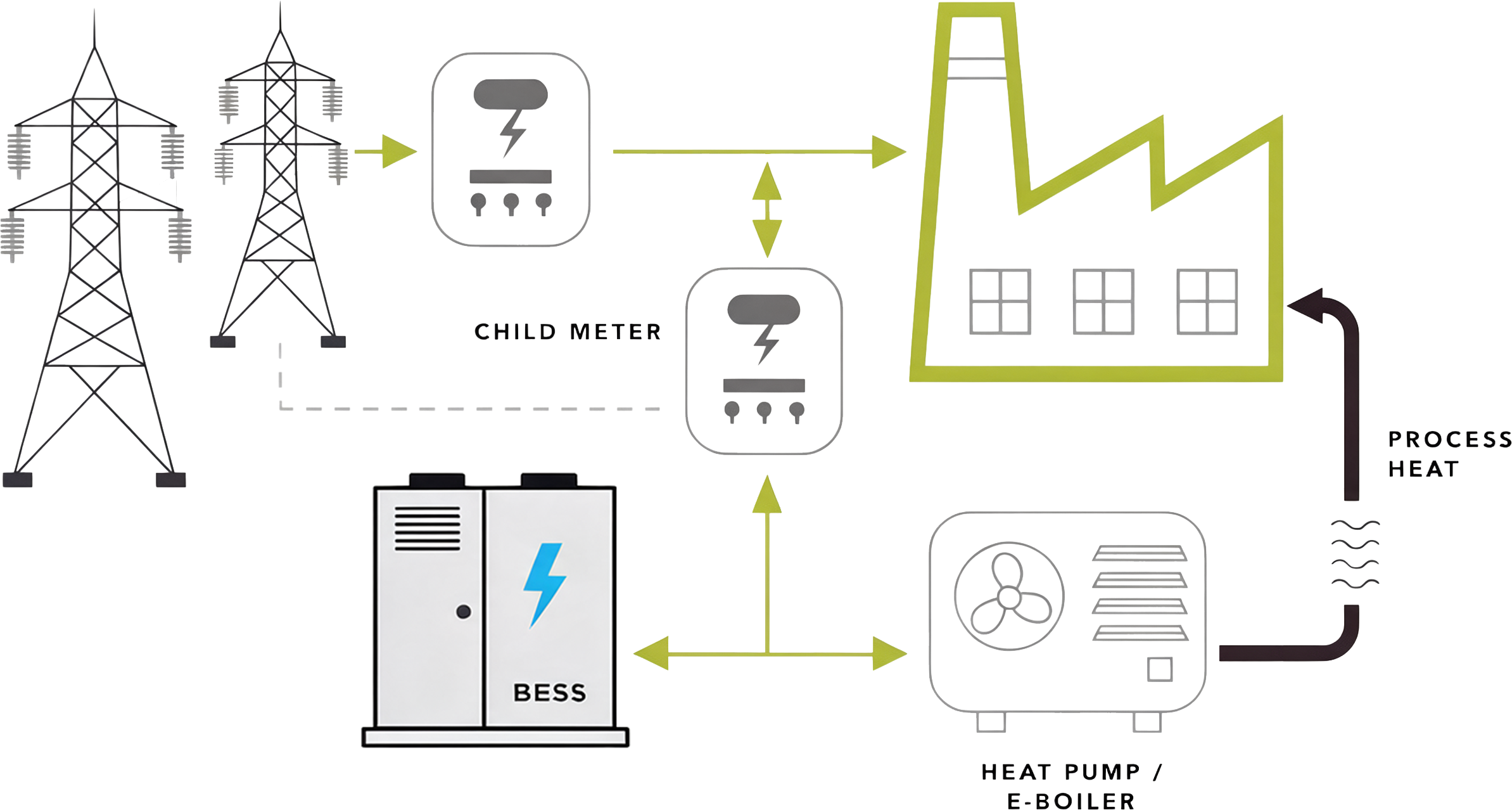
The benefits include:
- Removes the price volatility concern that stops many electrification projects.
- Lowers the effective cost of heat by concentrating consumption into the cheapest intervals.
- Cuts scope 1 emissions from gas and improves the scope 2 profile by charging when the grid is cleanest.
- Works with heat pumps, electric boilers and hybrid arrangements during transition.
It also gives you a staged path. The storage can be installed first and earn its return on arbitrage and demand reduction, with the thermal conversion following when the existing boiler reaches end of life. Because Optimal brings process engineering as well as electrical capability, we design the heat side as well as the power side.
It suits food and beverage processing, dairy, breweries and distilleries, commercial laundries, chemical and pharmaceutical process heat, and any site with a gas boiler approaching end of life.