
A conventional UPS solves one problem very well and nothing else. It sits between the grid and your critical load, conditions the power and covers the gap until a generator starts. For the rest of its life, it is a cost centre, carrying capital, floor space and cooling, plus a battery bank replaced on schedule whether or not it was ever called on.
Optimal's Hybrid-UPS gives sensitive sites the always-on benefit of a UPS with the financial benefits of a battery energy storage system. In normal operation, your site is insulated from the grid, with load served through the power conversion system, so voltage sags, swells, frequency excursions and transients never reach your critical equipment. That matters because sags are far more common than complete outages, and a site with good supply reliability can still lose production several times a year.
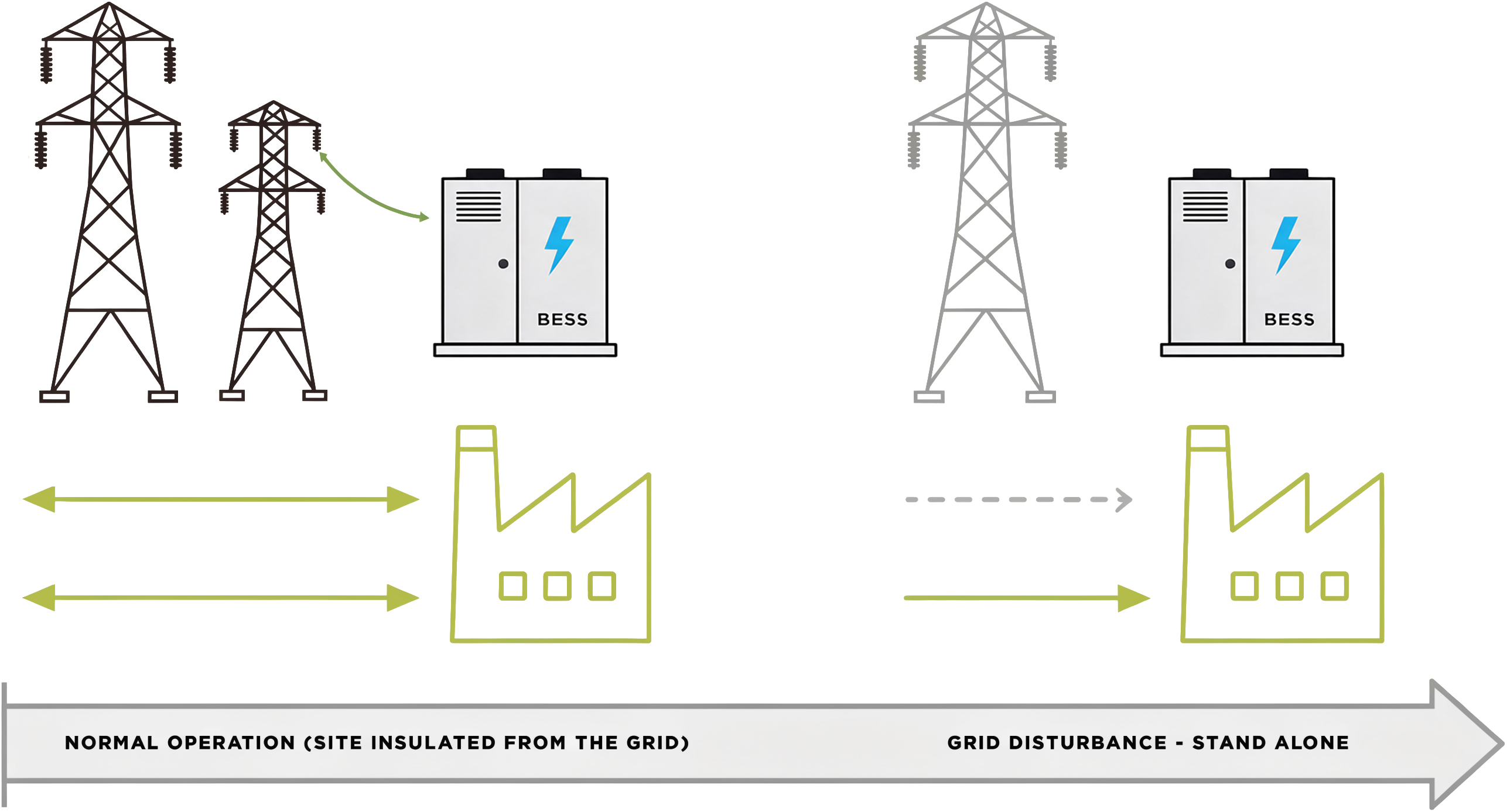
When the grid is disturbed or lost, there is nothing to transfer. The site is already running from the inverter, so it simply continues on stored energy, with other generation brought in where longer duration is needed. The rest of the time, the same asset earns its keep:
- Charges off-peak and discharges on-peak to lower energy costs.
- Shaves demand peaks to reduce network charges.
- Stores surplus solar for use later in the day.
- Replaces or reduces separate UPS capital, footprint, cooling and battery replacement cycles.
We match the chemistry to the duty rather than defaulting to one technology. Lithium iron phosphate suits most bulk energy needs, while lithium titanate or ultracapacitors can outperform it where a site needs very high power for a short ride-through. Where the load needs both, we often combine them.
Hybrid-UPS suits data and communications rooms, precision manufacturing, laboratories and medical equipment, cold chain and process plants with sensitive drives, and any site already budgeting for a UPS replacement.