
Off-grid power stations have traditionally relied on spinning reserve, running at least one more generator than demand requires so a unit can fail without tripping the whole site. This N+1 configuration works, but it is expensive. The spare engine burns fuel producing power nobody is using, running sets below their best load point drags down efficiency, and every hour adds maintenance cost to an asset that exists purely as insurance. On a remote site, fuel logistics come on top.
N plus BESS replaces the spare engine with battery storage. Your generators run at their efficient load point serving real demand, while the battery sits in reserve. If a set drops out, the battery picks up the load instantly, because there is no start, no ramp and no synchronisation.
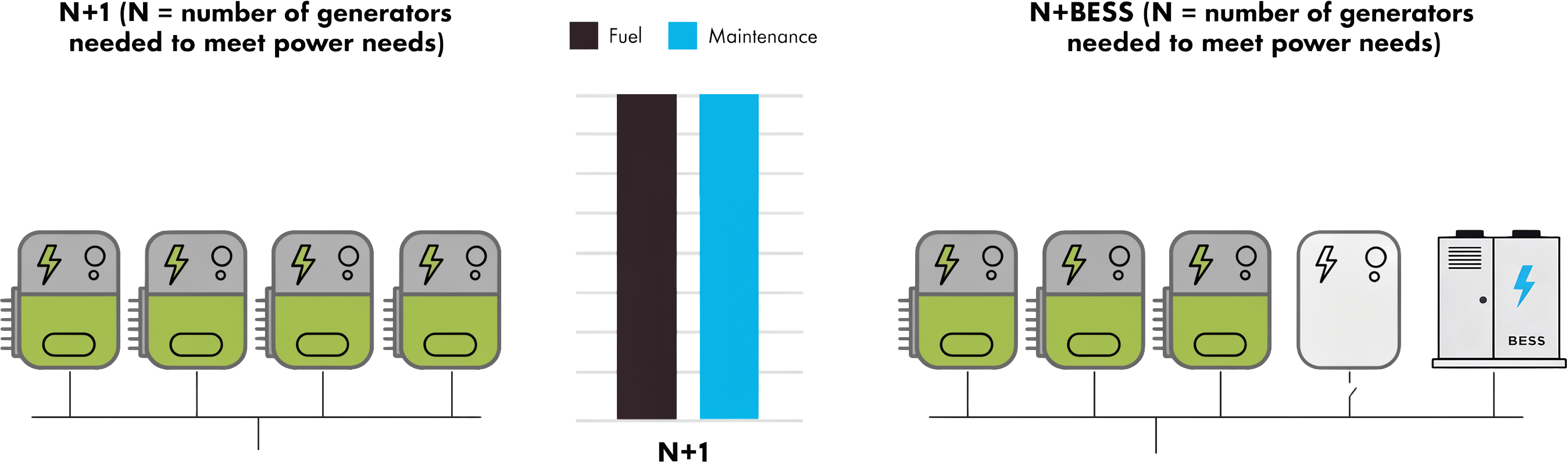
Optimal's indicative modelling for a representative site shows this can reduce fuel consumption by around 30 per cent and maintenance cost by around 25 per cent. These are modelled figures rather than a guarantee, and the real result depends on your generation fleet, load shape and duty. The benefits include:
- No engines running purely as reserve capacity.
- Better reliability, because storage responds instantly where an engine has to start.
- Improved power quality, as the battery absorbs sudden load steps.
- Lower emissions, less noise and less fuel to transport.
A BESS also creates the stable platform needed to add solar to an off-grid system, opening the door to displacing diesel altogether.
It suits remote mine sites, island and remote community power stations, Pacific island utilities, and any diesel or gas station running N+1 for security rather than for load.